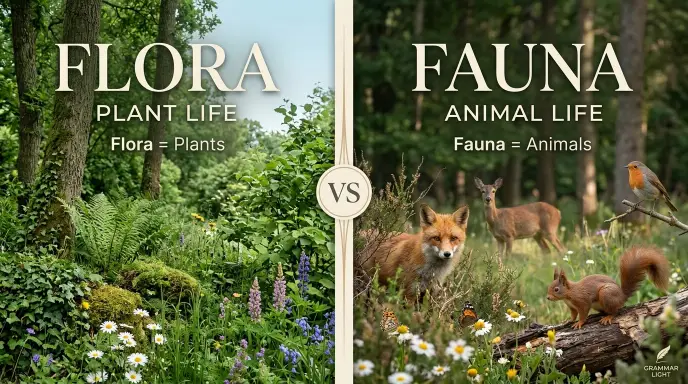
Fauna refers to the animal life of a particular region or environment, while flora refers to its plant life. These two terms are commonly used in biology, geography, environmental studies, and nature writing. Although they are often mentioned together, they describe two different parts of the natural world.
Understanding fauna and flora makes it easier to describe ecosystems, compare habitats, and explain how living organisms interact with their surroundings. For example, a forest may contain birds, insects, deer, and foxes as part of its fauna. Its flora may include trees, shrubs, mosses, and flowering plants.
People often search for flora or fauna because the words look and sound similar. Both refer to living things found in a particular place, but one focuses on animals and the other focuses on plants. Knowing this distinction helps students, writers, travelers, and nature enthusiasts use the terms accurately.
From tropical rainforests to dry deserts and cold mountain regions, these concepts help describe the variety of life found across the planet. Learning their meanings, origins, and practical uses provides a simple foundation for understanding biodiversity.
Fauna or Flora : Quick Answer
Fauna means animal life, while flora means plant life. Both terms describe living organisms associated with a particular geographical area, habitat, or period.
- Fauna: Mammals, birds, reptiles, fish, insects, and other animals.
- Flora: Trees, grasses, flowers, shrubs, mosses, and other plants.
For example, the fauna of a pond might include frogs, fish, and dragonflies. Its flora could include water lilies, reeds, and aquatic plants.
Remember the distinction this way: fauna focuses on animals, while flora focuses on plants. Together, the terms help describe the biological variety of an environment.
Definition and Meaning of Fauna and Flora
The words fauna and flora are used to classify two broad groups of living organisms. They are especially useful when discussing the natural characteristics of a location.
What Does Fauna Mean?
Fauna refers to the animal species found in a particular area, habitat, or geological period. The term can describe both large animals and small organisms, depending on the context.
For example, the fauna of an African savanna may include lions, elephants, zebras, giraffes, and numerous insects. A coastal region may have a different collection of fauna, including crabs, fish, seabirds, and marine mammals.
The word can also appear in scientific descriptions, such as “marine fauna” for animals living in the sea or “desert fauna” for animals adapted to dry environments.
What Does Flora Mean?
Flora refers to the plant species that grow naturally or occur within a particular region or habitat. It includes a wide variety of plants, from towering trees to tiny mosses.
For instance, the flora of a woodland may include oak trees, ferns, wildflowers, and mushrooms are not flora because fungi belong to a separate biological group.
Flora can be discussed by geographical location or habitat. The phrase “native flora” refers to plant species that occur naturally in a particular region, while “aquatic flora” refers to plants living in water.
Why Are These Terms Used Together?
The two words provide a convenient way to describe the living components of an ecosystem. Scientists and nature writers may discuss the flora and fauna of a national park, island, forest, or wetland to explain its biological variety.
Although these groups are described separately, they interact in many ways. Plants provide food and shelter for numerous animals, while animals can pollinate flowers, disperse seeds, and influence plant growth.
The Origin of Fauna and Flora
Both words have historical roots in Latin and have been used in scientific and descriptive writing for centuries.
Origin of Fauna
The word fauna is associated with Fauna, a figure in ancient Roman mythology linked with nature and fertility. Over time, the term developed into a word used to describe the animal life of a region.
Today, it appears in scientific fields such as zoology, ecology, and conservation. Researchers may use it to describe the animals living in a specific habitat or the animal species recorded during a survey.
Origin of Flora
The word flora comes from Flora, the Roman goddess associated with flowers and spring. The name later became connected with plant life and botanical descriptions.
In modern usage, flora may refer to plants found in a geographical area or to a systematic account of the plant species in that location.
The shared historical background helps explain why the words are frequently paired in discussions of nature.
Fauna or Flora: The Main Difference
The main distinction is the type of organism each term describes. Fauna concerns animals, whereas flora concerns plants.
| Feature | Fauna | Flora |
| Meaning | Animal life | Plant life |
| Main scientific field | Zoology | Botany |
| Examples | Birds, mammals, fish | Trees, grasses, flowers |
| Role in ecosystems | Pollination, seed dispersal, food webs | Food production, oxygen release, shelter |
| Example phrase | Forest fauna | Forest flora |
Consider a garden as an everyday example. Butterflies, earthworms, and birds belong to its fauna. Roses, grass, and shrubs belong to its flora.
The distinction is useful in research, education, travel writing, and environmental reports. It allows readers to understand If a description concerns animals or plants without needing a long explanation.
Fauna or Flora in Different Environments
The terms become easier to remember when applied to different habitats. Every environment has its own combination of animal and plant life, shaped by climate, water availability, soil, and other conditions.
Forests
Forest fauna may include deer, squirrels, owls, insects, and other animals. Forest flora can include tall trees, ferns, vines, mosses, and flowering plants.
Deserts
Desert fauna includes animals such as lizards, snakes, foxes, and certain insects. Desert flora may include cacti, hardy shrubs, and other plants adapted to limited water.
Oceans and Coastal Areas
Marine fauna includes fish, whales, crabs, and sea turtles. Marine flora may include seagrasses and certain types of algae, although algae are not true plants in the strict biological classification.
Grasslands
Grassland fauna may include antelope, prairie dogs, grazing mammals, and grassland birds. The flora is often dominated by grasses and seasonal flowering plants.
These examples show how the words describe different but connected aspects of the same environment.
How to Remember Fauna and Flora
A simple memory trick can help you distinguish the two terms without confusion.
Fauna = Animals. Flora = Plants.
You can also associate flora with flowers, since both words begin with “fl.” This is only a memory aid, but it makes the plant related meaning easier to recall.
Try using both words in a single sentence:
“The nature guide described the fauna and flora of the island, including its seabirds, lizards, native trees, and wildflowers.”
Here, the animal examples represent fauna, while the plant examples represent flora.
With a little practice, you can use the terms confidently when describing habitats, writing about nature, or studying ecosystems.
Fauna or Flora in Everyday Life
The terms fauna and flora are useful when describing gardens, parks, forests, farms, and other natural environments. They help explain which animals and plants live in a particular place.
For example, a wildlife photographer might describe the fauna of a national park by mentioning its deer, foxes, and birds. A botanist studying the same park might focus on its trees, wildflowers, grasses, and ferns.
These terms also appear in travel guides, school assignments, nature documentaries, and environmental reports. Using them correctly makes descriptions more specific and easier to understand.
Five Examples of Flora
Flora includes many types of plant life, from small ground covering plants to large trees. Here are five familiar examples:
- Oak trees: Large trees found in many forests and woodlands.
- Roses: Flowering plants commonly grown in gardens.
- Ferns: Plants with distinctive divided leaves that often grow in damp or shaded places.
- Cacti: Plants adapted to dry environments, with many species capable of storing water.
- Grasses: Plants found in lawns, meadows, grasslands, and many other habitats.
These examples represent different plant types and growing conditions. The species found in a particular region depend on its climate, soil, water supply, and other environmental factors.
Why Fauna and Flora Matter in Ecosystems
Animals and plants contribute to the health and stability of natural environments. Their interactions help maintain food webs, support reproduction, and influence how ecosystems function.
The Role of Animals
Animals can pollinate flowers, disperse seeds, control populations of other organisms, and help recycle nutrients. Birds may spread seeds to new locations, while insects such as bees can pollinate flowering plants.
The Role of Plants
Plants produce oxygen through photosynthesis and form the foundation of many food chains. They also provide food, shelter, and nesting places for animals.
How They Depend on Each Other
A flowering plant may provide nectar to a butterfly, while the butterfly transfers pollen between flowers. A tree can offer shelter to birds, and birds may spread the tree’s seeds.
These relationships show why studying animal and plant life together helps researchers understand biodiversity and environmental change.
Common Mistakes When Using Fauna and Flora
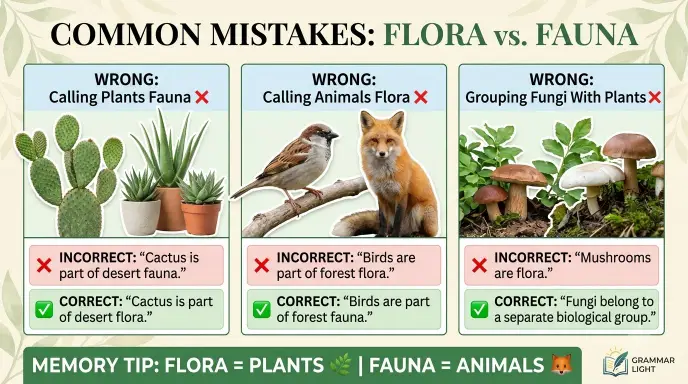
Although the words are often paired, they are not interchangeable. Understanding a few common errors makes their meanings easier to remember.
Using Fauna for Plants
Incorrect: “The cactus is part of the desert fauna.”
Correct: “The cactus is part of the desert flora.”
Cacti are plants, so they belong to flora.
Using Flora for Animals
Incorrect: “The birds are part of the forest flora.”
Correct: “The birds are part of the forest fauna.”
Birds are animals, so they belong to fauna.
Assuming Every Living Organism Fits These Two Terms
Fauna generally refers to animals, and flora refers to plants. Fungi, such as mushrooms, are classified separately from both plants and animals in modern biological classification.
Algae can also require a more specific explanation because different types belong to different biological groups. In everyday descriptions, however, the two terms remain useful for discussing animal and plant life.
How to Use Fauna vs Flora in Sentences
The words are commonly used together, but they can also appear separately.
1.Examples Using Fauna
- The island’s fauna includes seabirds, lizards, and several small mammals.
- Researchers recorded new animal species during their survey of the rainforest fauna.
- The desert fauna has adapted to extreme temperatures and limited water.
2.Examples Using Flora
- The region’s flora includes wildflowers, grasses, and native trees.
- Spring brings new growth to the local flora.
- The botanist documented the flora of the mountain valley.
3.Examples Using Both Terms
- The national park protects its rich flora and fauna.
- Climate change can affect the flora and fauna of sensitive habitats.
- Visitors can explore the unique flora and fauna of the island.
These examples demonstrate how the terms fit naturally into conversations about wildlife, plants, conservation, and travel.
FAQs About Flora or Fauna
Q.1 What Is the Meaning of Flora and Fauna?
Flora refers to the plant life of a particular region or habitat, while fauna refers to its animal life. For example, trees and flowers are flora, whereas birds and mammals are fauna.
Q.2 What Are Five Examples of Flora?
Five examples are oak trees, roses, ferns, cacti, and grasses. They represent different types of plants found in forests, gardens, deserts, and grasslands.
Q.3 What Is Called Fauna?
Fauna is the collective term for the animal life found in a particular geographical area, habitat, or period. It can include mammals, birds, reptiles, fish, insects, and other animals.
Q.4 How Do You Say Flora and Fauna in English?
In English, flora and fauna is a common phrase meaning the plant and animal life of an area. Both words have two syllables. The first syllable is stressed in each word, although pronunciation can vary slightly by accent.
Q.5 Why Is It Called Fauna?
The word fauna is associated with Fauna, a figure in ancient Roman mythology connected with nature and fertility. The word later came to describe the animals found in a region or habitat.
Q.6 What Does Flora Mean?
Flora means the plant life of a particular area or environment. It includes plants such as trees, grasses, shrubs, ferns, and flowering plants. The word is historically associated with Flora, the Roman goddess of flowers and spring.
Final Thoughts
Understanding fauna and flora makes it easier to describe the natural world accurately. Fauna refers to animals, while flora refers to plants. Both are important parts of ecosystems, and their interactions help sustain biodiversity.
If you are studying a forest, visiting a national park, or writing about a local habitat, remembering this basic distinction will help you use both terms correctly. Looking at animals and plants together also reveals how living organisms depend on one another and respond to changes in their surroundings.
SEE THE ADVANCE ARTICLES!

I’m a grammar writer focused on making English rules, word usage, and sentence structure simple and easy to understand.